

There are cities that you visit for their monuments.
And then there are those that mostly give the impression of arriving somewhere.
Fort Kochi belongs to this second category.
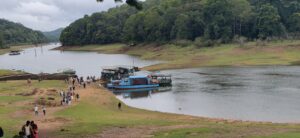
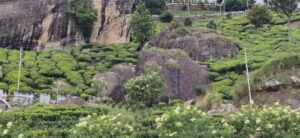
After several days travelling through Tamil Nadu and then Kerala, its atmosphere acts almost like a final surprise. The journey has already changed scenery several times: the monumental temples of Tamil Nadu have given way to the mountains and tea plantations of Munnar, then to the spices and forests of Periyar, before slowing down further in the backwaters.
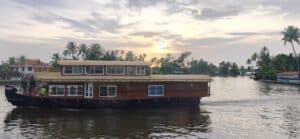
After a night on the water and a stop in our exclusive village of Suresh, one might think Kerala had already shown most of its contrasts.
Then Fort Kochi appears.
And everything changes once again.
AN ARRIVAL THAT FEELS LIKE THE DAWN OF A NEW ERA
Fort Kochi does not immediately give the impression of a big Indian city.
You still find the warmth, the scooters, the shops, the colours and that special energy that India knows how to produce. But something is different.
The streets tell a story of ports, trade and passageways.
The façades, churches, old houses and certain buildings serve as a reminder that this part of Kerala has long been a crossroads between different worlds.
Here, various influences blend with the city’s deeply Indian identity without ever supplanting it.
It’s probably this mix that makes Fort Kochi such a pleasure to explore on foot.
People don’t just come here to tick off a list of sights. They come to take in the details, wander down different streets, stop in front of a building façade, watch life unfold around the harbour, and sense that the city is made up of layers upon layers of history.
CHINESE FISHING NETS: A FAMOUS IMAGE THAT ALWAYS WORKS
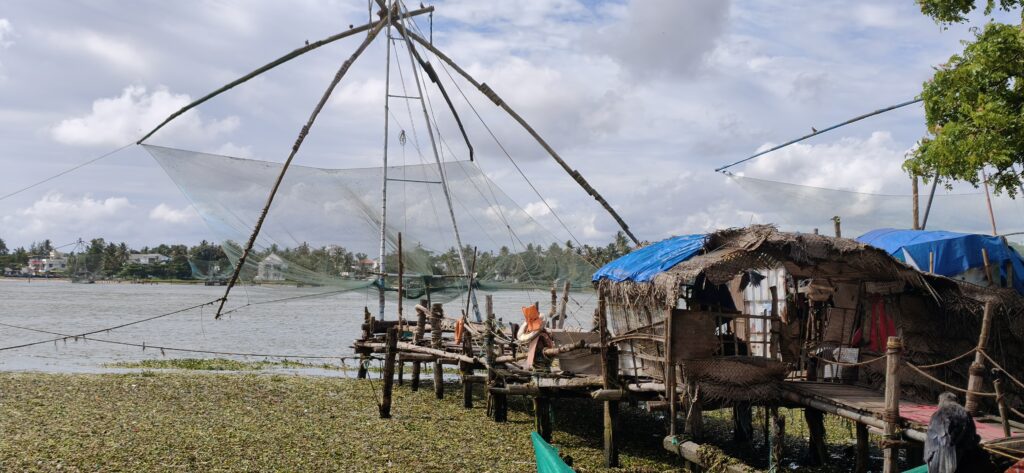
They are among the images most readily associated with Kochi.
The large fishing nets set up at the water’s edge cast almost graphic silhouettes along the seafront.
They have been photographed for decades and might seem too well-known to still surprise.
However, actually seeing them in action changes one’s perception.
They are not just tourist attractions.
They form part of the harbour’s landscape and serve as a reminder that Kochi was built around maritime trade, commerce and fishing.
In fact, the best moment isn’t necessarily the one when you’re trying to take the perfect photo.
Sometimes it is enough to spend a few minutes watching the movement of the seaside, the boats, the passers-by and the rhythm of the neighbourhood.
Fort Kochi is at its best when you’re prepared not to turn every visit into a timed tour.
ST. FRANCIS CHURCH: A FEW WALLS AND A LOT OF HISTORY
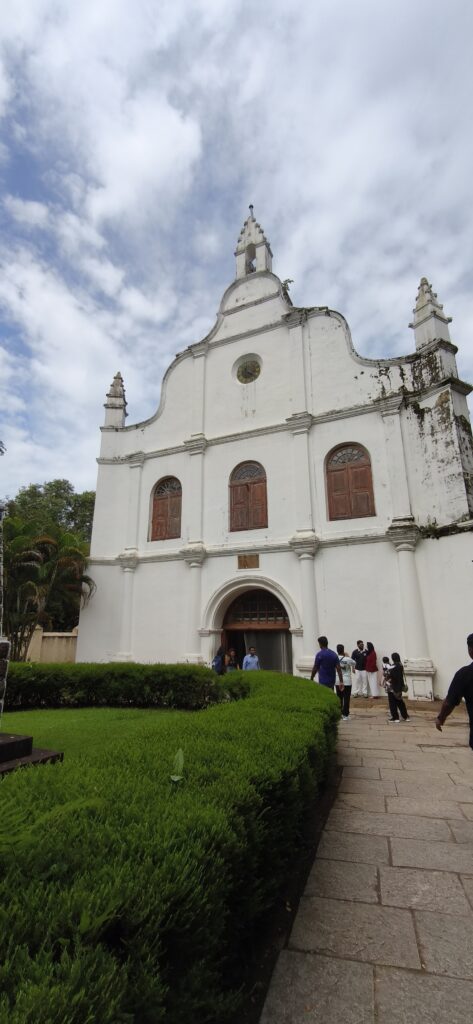
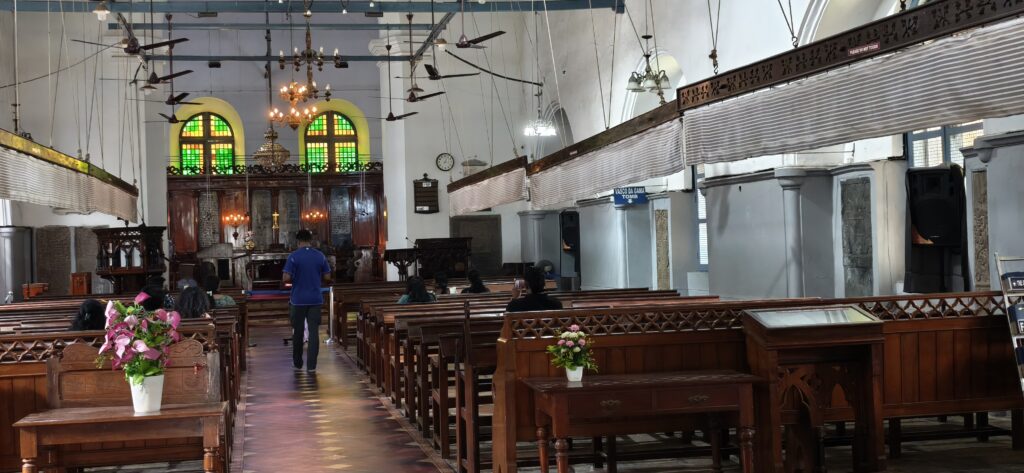
In the streets of Fort Kochi, St. Francis Church seems almost understated compared to the grand temples discovered a few days earlier in Tamil Nadu.
And it is precisely this contrast that makes it interesting.
Following the profusion of sculptures, colours and rituals found in the temples of southern India, this church offers a different perspective on the region’s history.
It highlights the role played by European trade and presence along this coast, as well as the successive transformations Kochi has undergone over the centuries.
We therefore realise that the point of Fort Kochi is not to look for a single identity.
The city is so fascinating precisely because it has several of them.
THEN COMES KATHAKALI
In the evening, the journey takes on a whole new feel.
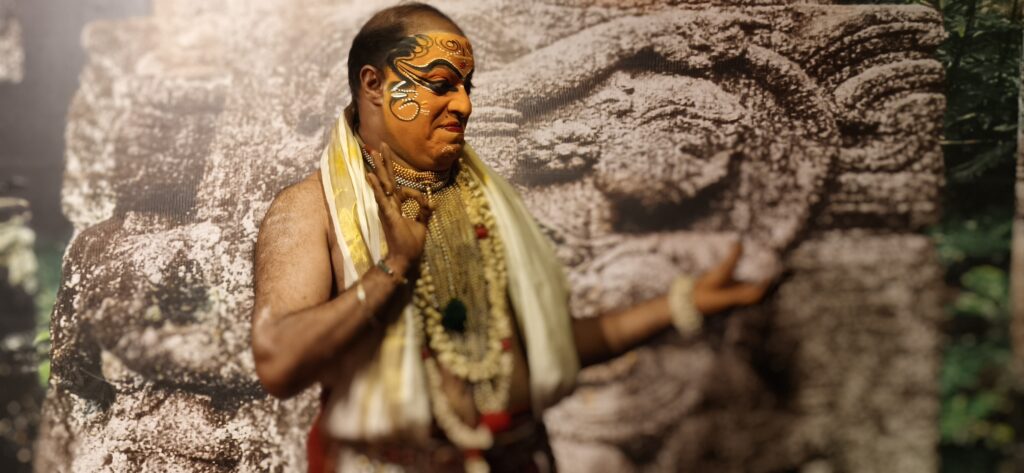
Kathakali is probably one of Kerala’s most instantly recognisable cultural expressions: intricately applied make-up, imposing costumes, codified gestures, facial expressions and storytelling through movement.
But attending a performance without understanding even the basics of what is being performed can also leave the visitor feeling detached.
One of the attractions of a performance at the Cochin Cultural Centre is precisely that it does not reduce Kathakali to a colourful image intended for photographs.
Make-up, preparation, facial expressions and body language are all part of the experience.
Gradually, one realises that not every movement is merely decorative.
The eyes speak volumes.
Hands speak.
The face tells a story.
The whole body becomes a language.
Even without knowing all the references, the show then takes on a whole new dimension.
A CULTURE THAT REQUIRES A LITTLE FLEXIBILITY
This is perhaps one of the most fascinating aspects of Kathakali for a Western traveller.
We must be prepared to slow down.
Once again.
A few days earlier, the backwaters had already forced this change of pace through the water and the journey itself.
In Fort Kochi, it is the culture that demands this availability.
We are watching the preparation.
We observe the expressions.
We are beginning to make out certain gestures.
And we gradually come to realise that the point is not simply to «see a traditional show», but to step for a moment into an artistic system completely different from our own.
WHY FORT KOCHI WORKS SO WELL AT THE END OF A TOUR
In a Tamil Nadu & Kerala itinerary, the location of Fort Kochi is particularly interesting.
The traveller has already seen a lot.
Gigantic temples.
Intense cities.
Markets.
Mountain roads.
Tea plantations.
Spices.
A nature reserve.
The backwaters.
Villages.
Arriving directly in a major modern metropolis could give the impression of abruptly breaking this progression.
Fort Kochi has the opposite effect.
The city remains urban, but it retains a human scale.
It makes it possible to walk.
It allows you to watch.
It blends history, seaside charm, architecture and culture.
And above all, it offers a conclusion unlike anything that has gone before.
KERALA ULTIMATELY DOES NOT HAVE JUST ONE FACE
That is probably what I will remember most about that part of the trip.
It would be easy to reduce Kerala to a few magnificent images: tea plantations, spices, backwaters, coconut palms and houseboats.
But the real Kerala is much more varied.
Munnar has almost nothing to do with Periyar.
Periyar is not like the backwaters.
The backwaters do not tell the same story as Suresh's exclusive village.
And Fort Kochi brings yet another dimension.
That is what makes the itinerary interesting: it does not rely on a single promise repeated over several days.
Every stage changes the atmosphere of the journey.
TAKING THE TIME TO STAY A WHILE
Fort Kochi therefore deserves better than a late arrival, a single night and a hurried departure for the airport.
The ideal is to leave him enough time to walk, see the seafront, discover a few historic buildings, observe the Chinese fishing nets and dedicate an evening to local culture.
This is not necessarily the most spectacular stage of Kerala.
But perhaps it is the one that best brings the journey to a close by connecting everything we have just discovered: history, trade, traditions, local life and living culture.
After several hundred kilometres through Southern India, Fort Kochi therefore does not simply feel like a final town.
It looks like a conclusion.
A conclusion that reminds us above all of one thing: in Kerala, just as you think you have understood the scenery, it changes again.
To check before departure: Travel advice and Travel formalities.
Find out more : Namaskar India Tour