
Stone Town
A dense, lively heritage atmosphere, where you can easily move from a shaded alley to a bustling waterfront. This is Zanzibar's most urban and story-rich side.
Include it at the beginning or end of your stay.Stone Town, lagons et rythme insulaire
Zanzibar is best discovered as a thoughtfully planned stay rather than a simple stopover. The main island, Unguja, brings together the clearest contrasts: Stone Town for its heritage, the north for swimming that is often...
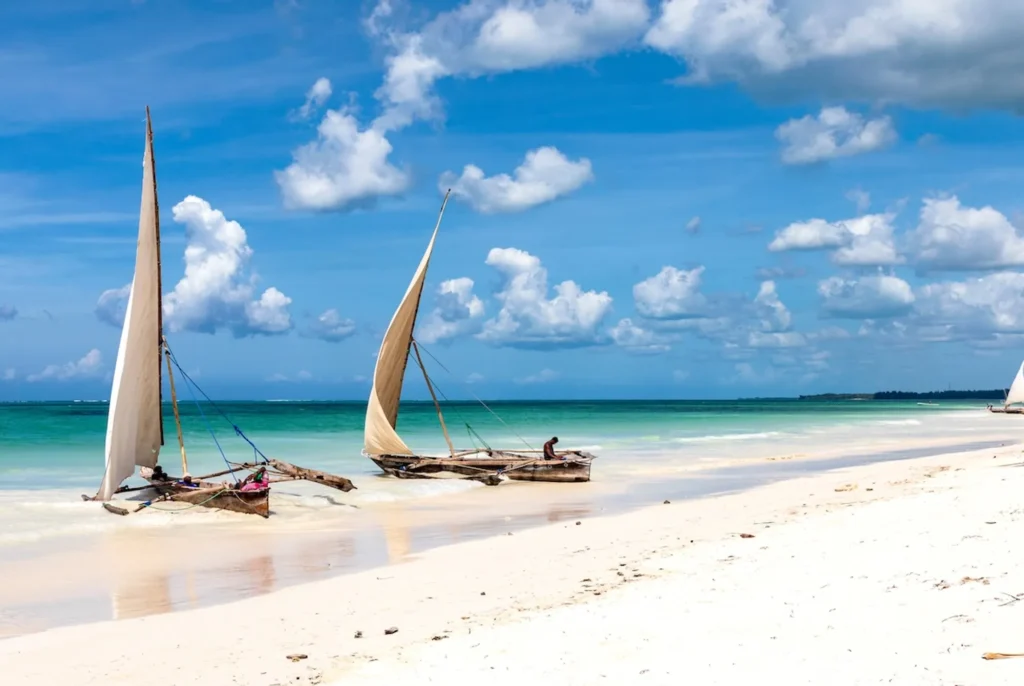
Zanzibar is best discovered as a thoughtfully planned stay rather than a simple stopover. The main island, Unguja, brings together the clearest contrasts: Stone Town for its heritage, the north for swimming that is often easier, and the east coast for longer, quieter beaches that are more affected by tides. This geography calls for some advance planning, but gives the journey a pleasing coherence if you embrace a flexible pace and a fixed base. You then move naturally from the city to the sea and on to more contemplative days, without losing your connection to the place.
Key insights to understand the destination before choosing your journey.
Quatre raisons lisibles, sans empiler les informations.
Travelling to Zanzibar means choosing a destination that combines switching off, charm and cultural depth. Few islands offer such a blend of urban heritage, Swahili atmosphere, fragrant cuisine and beaches suited to a settled stay. Travellers find a genuine sense of escape without completely losing their bearings: you can walk through Stone Town, have lunch facing the sea, take a boat trip and return to a characterful hotel. It also works well for couples and travellers on multi-destination trips, especially when the aim is to finish an itinerary with a gentler, more contemplative and more romantic chapter.
A dense, lively heritage atmosphere, where you can easily move from a shaded alley to a bustling waterfront. This is Zanzibar's most urban and story-rich side.
Include it at the beginning or end of your stay.An atmosphere of slowness, light and rest, particularly suited to travellers who want to break away from their daily rhythm. Days revolve around the sea, reading and short transfers.
Ideal for a stay focused on unwinding.Some areas of the island have a deeply contemplative feel, with shallow water, shifting colours and spectacular evenings. The experience is more about the senses than spectacle.
Seek this out if you want a romantic atmosphere.A more food-focused and cultural tone that adds depth to the stay without overloading it. Markets, aromas and coastal dishes ground the journey in a distinctly local world.
Combine it with a visit to Stone Town.The main islands and useful places for planning your stay.
The archipelago's main island brings together Stone Town, the best-known beaches and most tourist stays. It combines heritage, the sea and the simplest travel logistics.
Base la plus pratique.More discreet and greener, Pemba attracts travellers seeking a more secluded atmosphere than on Unguja.
Consider it as an extension to your stay.Mafia is better suited to travellers seeking peace, marine nature and a more contemplative pace.
An appealing option for a quieter extension.Around Unguja, various boat trips reach islets, reefs or sandbanks depending on the weather and tides.
Check conditions before departure.The historic centre of Zanzibar City embodies the archipelago's strongest heritage identity. It is the best starting point for understanding its trading history, Swahili influences and urban architecture.
Include it at the start or end of your stay.Zanzibar City encompasses Stone Town and its wider urban surroundings. It serves as a practical base for arrivals, cultural visits and some connections.
Useful as an initial base.The north of the island is often sought out for more straightforward beach stays, with a sea that is generally easier to access depending on the coast and season.
A good choice if swimming is a priority.The east coast offers longer beaches, scattered villages and a slower pace, with a strong tidal influence.
Prévoir des transferts plus longs.One of Stone Town's best-known landmarks, useful for locating the historic centre and understanding its layers of history.
Combine it with a walk.An iconic waterfront monument, often associated with the island's political and urban memory.
Vérifier l’état d’ouverture avant visite.The markets offer a tangible insight into local life, seafood and spices.
Go early for a livelier atmosphere.These northern beaches are among the most straightforward options for a classic beach stay, with sea conditions that are often easier to assess than on the east coast.
A good pairing for swimming.A few pointers to locate the destination and understand its layout.
The historic centre is compact and very well suited to exploring on foot. It is the best starting base for a first stay, especially if you want to limit transfers.
Pratique sans voiture.The north of the island requires a road transfer, with journey times varying according to traffic and the chosen accommodation. The way a stay works changes markedly between city and beach.
Anticiper les trajets.The east coast is more extensive and spread out, which lengthens journeys and requires more planning. The pace is slower, but also more dependent on the tides.
Plan to stay in one base.The south-east lies in a quieter area, suited to restful stays, sunsets and occasional excursions.
Ideal for slowing down.The north combines beaches, accommodation and boat trips with logistics that are often simpler than on the east coast.
Bon compromis balnéaire.A straightforward overview of the main seasons to help you choose the right travel pace.
juin à octobre
Zanzibar has a hot tropical climate, with generally high temperatures throughout the year and seasons mainly shaped by rain, humidity and winds. The most stable periods for a beach stay are generally between June and October, while January and February often offer a pleasant alternative before the long rains return. March to May is wetter, and November and December also see showers increase again. For travellers, the main consideration is less the heat than weather consistency and the quality of sea conditions.
Diving and snorkelling are possible for much of the year, but the best windows are generally when sea conditions are easier to assess, the weather is more stable and visibility is less affected by rain. From June to October, and often in January and February, conditions are generally more favourable for arranging more comfortable trips out to sea. Local operators remain essential for confirming visibility, sea conditions and suitable times for the chosen site. It is best to avoid fixing a diving day without any flexibility during the wettest months.
Three perspectives for a different understanding of the destination.
Zanzibar's history is that of a strategic Indian Ocean port, long connected to trade routes between Africa and Asia. Stone Town preserves an urban fabric that bears witness to this movement of people, goods and cultural influences. UNESCO highlights the city's exceptional illustration of the architecture and urban organisation of a Swahili trading town, enriched by Arab, Indian and European contributions. The journey thus gains a particular depth: the beach does not erase history, but continues it in a different form.
Zanzibar is best understood as an Indian Ocean Swahili culture, shaped by long-standing exchanges between East Africa, the Arab world, India and Europe. Stone Town is its best gateway: narrow lanes, carved doors, coral houses and the waterfront tell the story of a living trading city, listed as a UNESCO World Heritage Site. For travellers, the interest lies in observing everyday customs, the practices of trade and the sea's place in local life, without reducing the island to an exotic backdrop. A curious, understated approach that is attentive to religious and social contexts makes the discovery more accurate and richer.
Zanzibar's cuisine reflects its history as a maritime crossroads. Rice, fish, seafood, coconut and spices feature in simple but highly aromatic Swahili cooking. Markets and small local eateries often offer the most accurate insight into the destination: they reveal ingredients, dining habits and the direct link between cooking and daily life. For a pleasant stay, favour well-frequented places and thoroughly cooked dishes, and pay constant attention to food hygiene, especially when eating outside the hotel frequently.
A few starting ideas to explore further according to the season and pace of your journey.
In Zanzibar, the most successful experiences are often those that leave room for the island's rhythm. A visit to Stone Town helps you understand its Swahili and trading history, while a boat trip or a simple day at the beach brings rest to the stay. Spice markets, fish meals and sunsets round out the picture. The aim is variety without spreading yourself too thin: a little city, a little sea, a little culture, then time to enjoy the surroundings. This alternation is what makes the journey memorable.
Guidance to help you choose somewhere to stay that suits your journey.
Zanzibar is particularly well suited to charming hotels, small seaside places and accommodation that showcases local architecture. Stone Town works well for a first or last night, while the beaches of the east coast or north are better suited to a settled beach stay. The right choice depends mainly on what you want to do: walk, swim easily, enjoy a romantic setting or stay somewhere quiet. It is better to favour accommodation that suits the chosen coast rather than an overly central property poorly suited to transfers and tides.
A few travel ideas to take you from inspiration to departure.
The most relevant offers for Zanzibar are those combining charming accommodation, private transfers and simple experiences with strong perceived value: Stone Town, the beach, a boat trip, dinner by the water or a safari extension. The destination suits thoughtfully composed stays with few stops and a real focus on rest more than overloaded itineraries. The best opportunities are often those that leave flexibility over the coast, duration and pace, accommodating tidal and weather constraints without sacrificing comfort.

Karafuu Beach Resort, between the beach and tropical gardens in Zanzibar
Useful information to prepare for departure, including important points to check.
Informations indicatives a verifier aupres des autorites officielles avant le depart.
Answers to the most useful questions before you decide.
The most straightforward period for a beach holiday is generally from June to October, with more consistent weather and more comfortable conditions for the beach and boat trips. January and February can also offer a good alternative. March to May is wetter and calls for greater flexibility.
Yes, because Stone Town gives the stay context. Its urban fabric, narrow streets and Swahili heritage help you understand the island's history before moving on to the beach part of the trip. One or two nights are often enough to create this contrast between heritage and relaxation without overloading the itinerary.
The north of the island is often sought after for easier swimming, while the east coast offers longer beaches that are more affected by the tides. The right choice depends mainly on your travel pace, the season and the kind of beach you are looking for. Staying in one base remains the most comfortable option.
Yes, very much so. The island works well for a stay for two thanks to its charming hotels, sunsets, quiet beaches and island atmosphere. The journey gains even more depth when you combine Stone Town, a peaceful stretch of coast and a few simple experiences such as a seaside dinner or a boat trip.
A stay of 5 to 8 nights often offers the best balance for discovering Stone Town, enjoying a suitable beach and keeping a restful pace. A shorter trip can feel rushed. For longer stays, the appeal depends mainly on your desire to slow down, take marine excursions or combine the trip with mainland Tanzania.
Ask a quick question about Zanzibar: the answer stays on this page and draws on the mini-guide.
Explore further with Éléonore